
Wind growth in the U.S. is gathering pace as energy demand rises
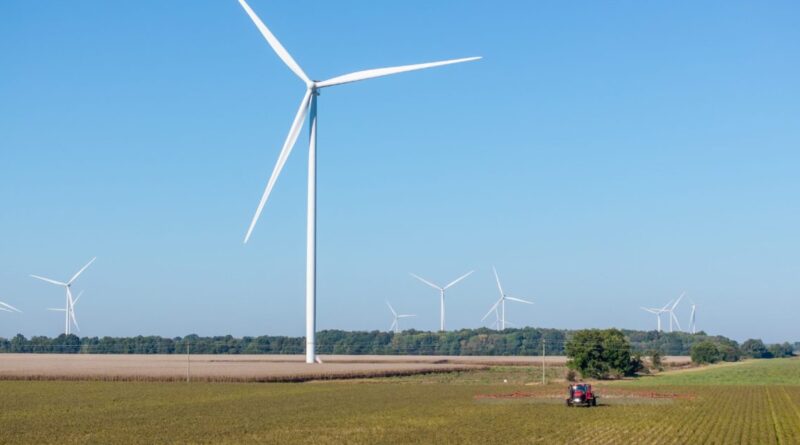
Photo: Cordelio Power 
After a slow stretch, U.S. wind is headed for a pivotal moment, with a near-term bounce that collides with rising energy demand, tariffs and stubborn permitting hurdles.
Wind power in the US: the next five years
The US is expected to add more than 7 gigawatts (GW) of new wind capacity in 2025, a 36% increase from this year, according to the latest US Wind Energy Monitor report from Wood Mackenzie and the American Clean Power Association (ACP).
This matters now as the US grid is under increasing pressure, just as it becomes increasingly difficult to build new generation. Demand for electricity is rising for the first time in years, driven mainly by data centers and other large loads, while wind power developers grapple with higher turbine costs, tariff uncertainty and permitting delays. How quickly projects can move from pipeline to completion over the next few years will determine whether wind helps keep the lights on and electricity prices under control.
In the longer term, the outlook is stable, but increasingly backward. The report still says 46 GW of new wind capacity will come online between 2025 and 2029. has the timing is changed. More projects are now expected to reach completion mid-decade, with 2026 and 2027 being particularly busy with 10.7 GW and 12.7 GW, respectively, as projects progress through the development process.
This shift helps explain why installations were delayed earlier this year. Third-quarter wind additions came in at 932 megawatts (MW), about 23% below estimates. But the activity is quickly gaining momentum. Developers have roughly 3.8 GW lined up for Q4 2025 alone, which would represent 52% of total expected annual capacity. This kind of end-of-year rush is typical of wind projects, which tend to be completed toward the end of the calendar year.
There are also signs of life on the production side. US turbine order intake bounced back to pre-Trump law levels in Q3, with more than 2GW of firm commitments, the strongest quarter in nine months and a 79% jump from the previous quarter. But you wouldn’t know it because turbine manufacturers are increasingly guarding the details of the project, and much of the qualifying activity of “starting construction” takes place away from where the components are manufactured.
Looking further, the report suggests a noticeable slowdown towards the end of the decade. Capacity additions are expected to fall sharply in 2029 following project cancellations and inactive designations, largely due to permitting challenges and broader development constraints.
Energy consumption decreases
At the same time, the need for new energy is growing rapidly.
After a decade of largely stagnant electricity demand, US electricity demand is now expected to grow by around 3% annually through 2029, compared to just 0.7% over the previous decade. Data centers alone are expected to drive about 59 GW of the roughly 90 GW increase in peak demand. This kind of continuous load requires more wind power.
“The U.S. electricity market is facing increasing stress after a decade of stagnant demand, with utilities committing to 160 GW of heavy-duty additions,” said Leila Garcia da Fonseca, director of research at Wood Mackenzie. “This presents a significant opportunity for wind power, which benefits from strengthened economic fundamentals and a compelling business case driven by its competitively low LCOE.”
But she also warned that higher turbine costs and political uncertainty could slow progress by mid-decade.
Offshore wind: Western states lead
Onshore winds continue to do the heavy lifting. The five-year onshore outlook remains unchanged at 39.8GW of new capacity, and the 2025-2027 pipeline already has orders for turbines for each project. More than 60% of this three-year capacity has either been commissioned or is already under construction.
Western states are leading the way. Wyoming, New Mexico and neighboring states are expected to account for about 34% of onshore activity during this period. The numbers are driving large projects, including Pattern Energy’s 3.5 GW SunZia project in New Mexico, which should make the company the top wind supplier in 2026, and Invenergy’s 998 MW Towner Energy Center in Colorado, the single largest project, which is expected to come online in 2027.
The wind is also spreading into new territory. Arkansas recently brought its first utility-scale offshore wind farm online with Cordelio’s Crossover Wind (pictured).
Another bright spot remains the restoration of power supply to older wind farms. Wood Mackenzie expects the 18 repowering projects to add approximately 2.5 GW of capacity over the next three years.
Offshore wind: progress but pressure
Offshore wind is a different story. Wood Mackenzie expects offshore installations to slow in Q4 2025 due to harsh winter weather, pushing some capacity into 2026. Projects already under construction, however, are continuing. Vineyard Wind connected 15 turbines in the third quarter and delivered 200 gigawatt hours (GWh) of electricity in the first nine months of the year.
“The US offshore wind shows diverging dynamics,” Garcia da Fonseca said. “Projects under construction with a commercial operation date of 2026 continue to meet key milestones, but development beyond 2027 faces potential delays due to limited wind turbine installation vessel capacity, delays and contract terminations.”
The offshore sector is also under increasing financial pressure – and let’s not forget the political onslaught from the Trump administration – with delays and contract terminations weighing on projects from the end of the decade.
Tariffs make turbines more expensive
Tariffs remain one of the biggest wild cards for the US wind industry. Wood Mackenzie expects tariffs to increase turbine costs in 2026 before easing in later years. Overall, US wind investment is expected to grow by approximately 5% through 2029.
“U.S. wind turbine prices are experiencing uncertainty as conflicting market and regulatory forces interact,” Garcia da Fonseca said. While domestic production capacity could eventually reduce prices, tariffs on raw materials and key components are expected to keep costs elevated in the near term.
Read more: Federal judge rules Trump’s offshore wind ban illegal
If you are looking to replace your old HVAC equipment, it is always a good idea to get quotes from several installation companies. To make sure you find a trusted and reliable HVAC installer in your area that offers competitive heat pump prices, check out EnergySage. EnergySage is a free service that makes it easy for you to get a heat pump. They have pre-screened heat pump installers who compete for your business and ensure you get a high quality solution. Plus, it’s free to use!
Your personalized heat pump quotes can be easily compared online and you get access to unbiased energy advisors to help you every step of the way. Get started here. – *advertisement


FTC: We use automatic affiliate links with income. More.