
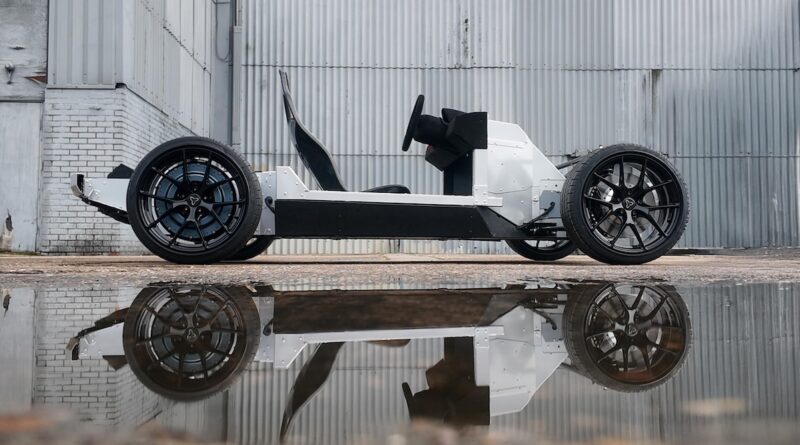
The new EV Mashup combines in-wheel motors with a modular platform
Support CleanTechnica’s work with a Substack subscription or on Stripe.
Now is the right time to launch a new electric vehicle anywhere in the world – except in the US, where the wheels of vehicle electrification are turning in reverse. Yet hope springs eternal. With that in mind, let’s take a look at British automaker Watt Electric Vehicle Company, which is showing off its new partnership with Finnish electric motor company Donut Lab at CES 2026 in Las Vegas, Nevada.
Find them at booth #5539 in West Hall if you happen to be in the neighborhood.
EV and the revolution in bike motors
Conventional ICE vehicles may use in-wheel motors, but the real magic happens when the technology is applied to electric cars. “The holy grail of electric vehicle technology is in-wheel electric motors that deliver power directly to the street and eliminate a host of other components,” CleanTechnica observed all the way back in 2013. Although the exact numbers are the subject of further study, an analysis published by the global engineering association SAE International in 2023 shows that electric vehicles with in-wheel motors are 18% more efficient than their single-motor counterparts.
Donut Lab is among the electric car innovators who put motors in bikes. The company has exceeded CleanTechnica radar at CES 2025 when it unveiled the latest iteration of its technology. “The new Donut Lab engine fits inside a 21-inch wheel and promises impressive performance. For example, each can produce up to 630 kilowatts (845 horsepower) and 4,300 newton meters (3,171 pound-feet) of torque. Imagine four of those puppies bolted to your favorite ride!” CleanTechnica noted in January.
This particular motor weighs around 40 pounds (88 kilos), which is significantly less than a conventional electric motor of this type. Donut Lab is also innovating in other areas of EV engineering, but the company describes its eponymous Donut Motor as a “flagship of innovation.” According to the company, the Donut Motor is “the world’s first-ever in-wheel motor that combines maximum torque and power density with a lightweight design, eliminating the need for traditional drivetrain components.”
Not just one electric motor, but five
She provided Donut Lab in September CleanTechnica with an overview of the complete lineup of electric motors unveiled at CES 2025. “Each of the five motors is designed for a different category of vehicle, from scooters and motorcycles to heavy trucks and drones,” Donut Lab said.
“The family combines direct drive architecture, ultra-high torque and power density, and light weight,” they added.
Donut Lab also provided some additional details about the Donut Motor. “By eliminating transmissions, driveshafts, and differentials, it reduces unsprung weight and simplifies vehicle design,” explained Donut Lab.
“Its innovation lies in the characteristic shape of our engine,” they elaborated. “With a larger diameter and minimal active materials, we are able to achieve higher torque and power density – essentially more power and torque per kilogram – than conventional motors.”
“In addition to performance, this lowers powertrain costs and opens the door to modular flat-floor vehicle platforms,” Donut Lab pointed out again for good measure.
Motor in a wheel and a light chassis
In September, Donut Lab also said CleanTechnica that several OEMs have already contracted to deploy the Donut Motor, one of which is the WATT Electric Vehicle Company.
WATT announced the new partnership on December 17, noting that the two companies have combined “the best-in-class light weight enabled by WATT’s ‘module-to-chassis’ integrated battery platform with the agility of Donut Lab’s in-wheel motors.”
Don’t get too excited just yet. The skateboard platform on display at CES is a prototype, not a production vehicle. A four-motor version will also be launched later in 2026. The prototype has only two motors for now, one for each rear wheel. Still, the prototype showcases WATT’s modular design and offers some key insights into the marketability of EVs elsewhere around the world, if not in the US.
“The result is an exceptionally lightweight EV platform that delivers tremendous performance and unmatched agility, capable of creating a variety of vehicle configurations from beach buggies to high-performance sports cars to commercial vans,” explains WATT.
“This modular approach dramatically lowers the barrier to new vehicle development while maintaining the highest standards of performance and efficiency,” the company adds.
Here are some other marketing pitches from WATT:
At the heart of this partnership’s innovation is the ability to independently control each motor in the Donut Lab bike with millisecond accuracy. This creates an unprecedented degree of torque vectoring during cornering on tarmac or when searching for grip off-road.
By eliminating traditional powertrains entirely, the direct-drive architecture removes unnecessary weight, frees up packaging space, and reduces complexity while dramatically improving power transfer efficiency. The real-time steering system capabilities provide a level of precision, stability and traction control far beyond what conventional systems can achieve, fundamentally changing the driving experience.
With next-generation software-defined driving dynamics, the OEM has full control over the desired driving experience for the final product.
Meanwhile, back in the US…
Meanwhile, here in the US, the prospects for a recovery in EV sales are looking dimmer by the minute. If there is an exception among the 50 states, the one to watch is California, which would be the 4th largest economy in the world if it separated from the rest of the US.
So far, EV stakeholders in the state are holding firm. One sign of confidence came last week from British firm Moke International, which is moving forward with plans to sell the rather expensive and impractical Moke Californian open electric car in California.
A more solid indication comes from the IONNA EV charging joint venture populated by BMW, General Motors, Honda, Hyundai, Mercedes-Benz, Kia, Stellantis and Toyota. In November, IONNA announced a new investment of more than $250 million to build a network of “Rechargery” stations in California (more on Rechargery background here).
Along with the new infrastructure, IONNA is also launching a new open-door-style outreach program in partnership with California dealers to spark interest among potential first-time EV drivers.
“Where better for the ‘EV Curious’ to explore the options and demystify charging in the transition to zero-emissions,” asks IONNA rhetorically.
Likewise, IONNA also noted that Rivian and Ford can now announce involvement in the Rechargery “Plug & Charge” system, along with founding members BMW, General Motors, Hyundai, Kia and Mercedes. By the end of 2026, Honda, Stellantis and Toyota will also participate.
It certainly sounds like someone believes in increasing EV sales, at least in California. If you have any thoughts about this, please comment.
Photo (cropped): British startup WATT Electric Vehicle Company will unveil its new modular EV platform at CES 2026 in Las Vegas, which will feature in-wheel motors designed by Finnish firm Donut Lab (courtesy of WATT via email).
Subscribe to CleanTechnica’s weekly Substack for Zach and Scott’s in-depth analysis and high-level summaries, subscribe to our daily newsletter, and follow us on Google News!
Got a tip for CleanTechnica? Do you want to advertise? Want to suggest a guest for our CleanTech Talk podcast? Contact us here.
Subscribe to our daily newsletter and get 15 new cleantech stories a day. Or subscribe to our weekly top stories article if every day is too much.
CleanTechnica uses affiliate links. See our policy here.
CleanTechnica Comment Policy