
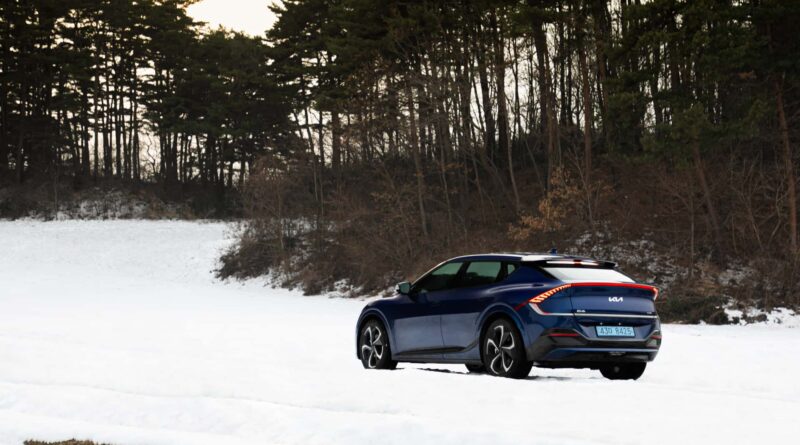
For the maximum winter range of an electric car, you want a car with this function
- Electric cars can lose up to 20% of their maximum range in the cold.
- It can be difficult to deal with, but it is not an obstacle. And some EVs handle losses in cold weather better than others.
- What you really want is a heat pump EV. Here’s why.
For anyone who might be concerned about losing their electric vehicle’s range in the winter, let me get this out of the way first: Yes, it is, unfortunately, a real thing. But it is surmountable. And with the right EV, it doesn’t have to be as existential as it used to be.
Recent data from battery health startup Recurrent dives into the latest trends in winter-related electric range losses, and there’s good news and bad news. The 34 popular, newer EVs analyzed by Recurrent were found to average 78% of their normal range in sub-freezing temperatures. In other words, if your EV normally has a range of 300 miles — which in America we consider the table stakes for a good, modern battery-powered car — you’re looking at an actual range of about 234 miles.
Critical Materials, our morning newsletter, is your must-have auto and tech briefing.
“All cars lose efficiency in cold weather,” Recurrent’s study said accurately. “Whether gas or electric, overall range decreases and fuel costs increase in harsher winter climates. This is unfortunate news for all drivers, regardless of powertrain.”
Of course, EV range losses will vary depending on actual temperatures, driving speed, altitude, driving style, overall efficiency of the car, and many others. And they’re not all created equal: “Each model performs differently based on available features and battery chemistry,” according to the Recurrent study. “The best winter range EV achieves 88% of its maximum range at 32 degrees F and the worst only 69%.”
So what you really want is a heat pump EV.
In an electric car, a heat pump is just like the increasingly popular electric home heating and cooling: a system that takes heat from the outside air, even when temperatures are low, and transfers it to the car’s cabin. It also helps with cooling by working in reverse to the standard air conditioning, drawing heat from the cabin to cool it down.
This puts a lot of strain on your EV’s air conditioning system, which consumes a significant amount of its energy, reducing your overall range. (In fact, you can even see your EV’s estimated range increase when you turn off the heat or air conditioning; on my Kia EV6, it can represent an estimated range of 10-12 miles.)
The good news is that heat pumps are now increasingly standard equipment in modern electric cars. Older cars—even those from the early 2020s—didn’t always have heat pumps, but the auto industry has found them to be pretty essential to maximizing winter range.
So how do you know that an electric car has a heat pump? Recurrent has a list for that too, though you should always check the manufacturer’s website to be sure. For example, Audi now puts heat pumps on its EVs, but stopped short with the Q4 E-Tron due to supply chain issues.
Here are some of them:
- 2024+ Acura ZDX
- Audi E-Tron models 2025+
- 2024+ BMW i4, iX, i7 and iX3
- Cadillac Lyriq 2023+
- Chevrolet Blazer EV
- Chevrolet Equinox EV
- Ford F-150 Lightning year 2024+
- Ford Mustang MachE 2025+
- Hyundai, Kia, Genesis electric cars
- Honda Prologue EV 2024+
- 2024+ EV Lucid Motors
- Nissan Leaf 2026+ (SV+, Platinum)
- Polestar 2 with Plus Pack/Climate Pack
- Polestar 3, Polestar 4
- 2021+ Tesla Model 3, Y, S, X
- Tesla Cybertruck 2024+
- Volvo EX30, EX90, EX40 Recharge, C40 Recharge
And so on. Again, do your research to make sure your EV is up to the task, especially when buying used. These weren’t as common as they are today, so it can make a big difference in overall winter performance.
Take Tesla for example. The Tesla Model 3 received a heat pump starting with the 2021 model year refresh, which began in late 2020. The Recurrent graph below shows the difference in winter performance between the two models:
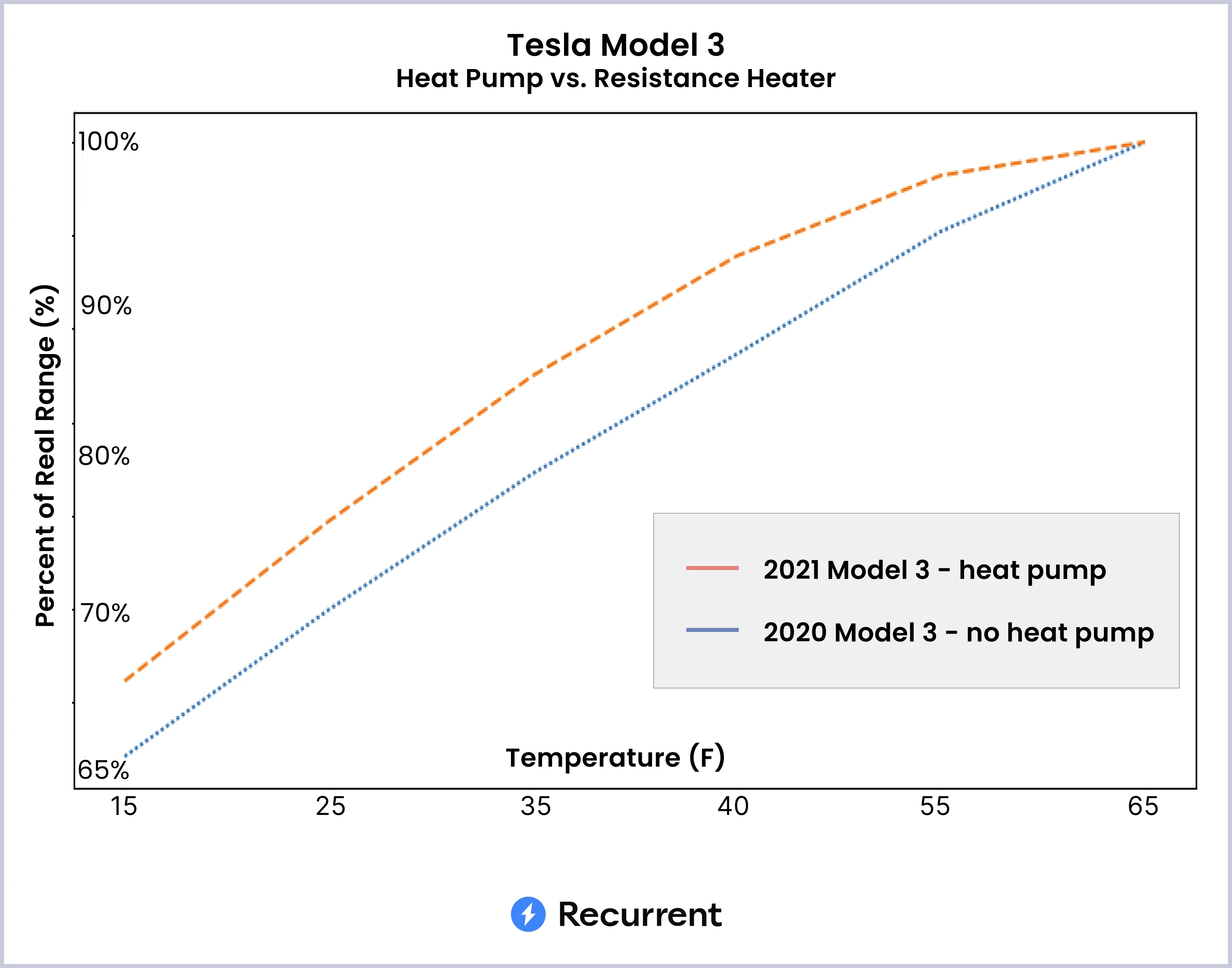
Recurring
Photo author: Recurrent
Over time, as battery chemistries, heating systems and even charging infrastructure improve, hopefully cold-weather range losses won’t be too much of an issue. For now, it’s best to make sure your car has a heat pump so it can use the energy where it’s intended – actually moving the car.
Contact the author: patrick.george@insideevs.com